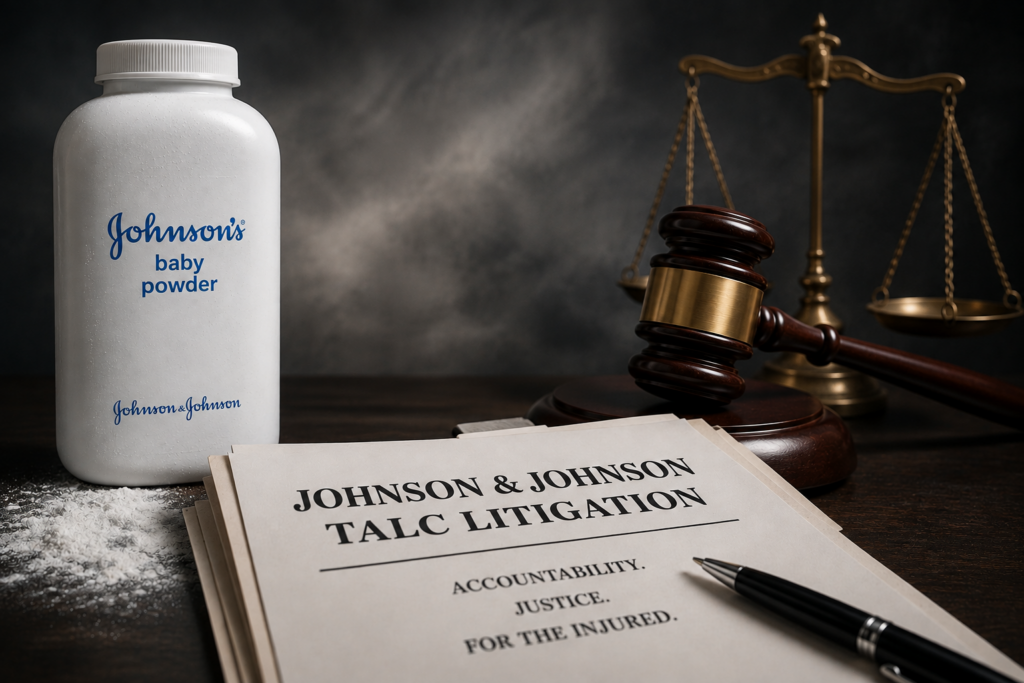
On July 27, 2026, Johnson & Johnson announced a $5.5 billion deal to resolve roughly 76,000 lawsuits alleging its talc products caused ovarian cancer. This is the fourth attempt at resolution. The deal isn’t final and hinges on at least 95% of eligible claimants signing on.
The talc claims were never certified as a class action under Rule 23. They were consolidated instead as a Multidistrict Litigation (MDL), which groups similar lawsuits before one judge for efficiency but doesn’t merge them into a single collective claim. Each of the 76,000 plaintiffs still has an individual case, and no one can be forced into a settlement. So, to resolve everything at once, the deal builds in its own mechanism for critical mass: a participation threshold.
If the 95% threshold isn’t met, the whole settlement is jeopardized, and the cases return to individual litigation. Thresholds like this are standard in mass tort settlements because they solve a problem for both sides: for the defendant, settling with only part of the group still leaves open-ended financial exposure. For plaintiffs, it turns an individual case into a group problem. If too many claimants hold out, the deal collapses for everyone, including those who wanted to accept it. That pressure is what pushes the group toward a collective yes.
Other notable features of the deal:
- J&J won a June 2026 California bellwether trial, and a federal judge recently pressed plaintiffs to justify weaker claims after they withdrew key experts.
- It follows three failed bankruptcy attempts, including the “Texas two-step” maneuvers that courts rejected over how claimant votes were counted. This deal is narrower — no bankruptcy, and future claims aren’t covered.
- The payout isn’t capped. Claims are valued individually rather than split from a fixed pot, so the total could exceed the $5.5 billion headline — plaintiffs’ counsel have suggested $7 billion or more.
- The timeline is fast for mass torts: first payments in 2027, with most claimants paid within roughly 18 months.
Impact on Plaintiffs
After much controversy and legal maneuvering, any settlement is a positive outcome for plaintiffs. J&J’s failed bankruptcy attempts and a string of high plaintiff verdicts gave plaintiffs leverage in these negotiations. J&J came to the table because prior strategies to cap or contain its exposure had not worked, not because plaintiffs were forced to the table.
Mass tort settlements often attempt to include future as well as present claims. This settlement specifically excludes future claims, which will make MDL cases difficult to prove.
Impact on J&J
For J&J, the deal is best understood as settling from a position of strength rather than desperation. The company had just won a June 2026 California bellwether trial, and a federal judge had separately pressed plaintiffs to justify weaker claims after they withdrew key experts, both signs that J&J’s litigation posture was improving, not deteriorating, going into these negotiations.
The structure of the deal reflects that strength. Unlike J&J’s three prior bankruptcy attempts, this settlement is narrower: it does not involve bankruptcy, and it does not cover future claims, meaning J&J retains exposure to new talc claimants down the road. It also does not cap the payout. Claims are valued individually rather than drawn from a fixed pot, so the ultimate cost could exceed the $5.5 billion headline figure.
In exchange for that open-ended exposure, J&J gets what it has been unable to secure through bankruptcy: a realistic path to resolving the bulk of its existing talc litigation on a fast timeline, with first payments beginning in 2027 and most claimants paid within roughly 18 months. It lets J&J price the unknown and forces a divided plaintiff group toward a collective decision, rather than leaving the company to litigate thousands of individual cases indefinitely.