Last month, a Los Angeles County jury held Meta and YouTube legally responsible for harming a child. It was a bellwether case in an industry under increased scrutiny. A bellwether trial is a carefully selected test case chosen to represent a larger group of lawsuits. The idea is to let both sides take a small number of cases all the way to a jury, see how the arguments and evidence land, and use that outcome to guide the thousands of cases that follow. For the California litigation against social media companies, two additional bellwether trials have been scheduled.
In this case, a 20-year-old woman identified in court documents as KGM, began using YouTube at age 6 and Instagram at age 9. She told the jury she was on social media all day long as a child, and that the addiction exacerbated serious mental health struggles. TikTok and Snap both settled before the trial began. Meta and Google chose to fight — and lost.
That loss is the first step in informing thousands of cases, both filed and yet to be filed.
For context, the tobacco industry argued that the harms of their products were unproven, that individual choice absolved corporate responsibility, and that any negative outcomes were attributable to other factors. Jurors and courts eventually disagreed, and the financial and regulatory consequences reshaped that industry and product reputation.
Legal pressure of litigation forced the companies to change how their products were marketed and labeled, not just pay a fine and move on.
There is another industry whose practices mirror what social media companies are accused of doing to children: gambling. Regulators and courts have long scrutinized how betting platforms target young people at the precise developmental window when they are most susceptible to addictive behavior. The design similarities are not coincidental; free demo mode, bonus and free bet offers, in-app sports integrations, social media features, loyalty rewards, notifications, influencer marketing, and algorithmic pressure are just some of the tools used to attract and addict a young, vulnerable audience.
At Locks Law, we are involved in gambling cases. And when we look at the California verdict, we see something bigger than a single industry being held accountable. We see a legal framework built on product design, addiction science, and the deliberate targeting of minors that has direct implications for the next wave of digital harm litigation.
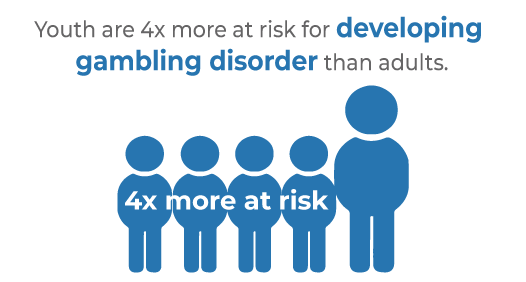
The parallel to online sports betting is not subtle. Platforms like DraftKings and FanDuel have deployed many of the same mechanics: variable reward schedules, algorithmically personalized offers, push notifications timed to exploit impulse, and aggressive marketing through the athletes and influencers that teenagers already follow. Youth gambling rates have quadrupled in just two years. And the industry, like social media before it, has resisted meaningful regulation at every turn.
And beyond gambling, the horizon extends further still. AI companions, recommendation engines, and immersive platforms are already exhibiting the same design patterns, with chatbots becoming friends with catastrophic results.
The tech industry is as embedded in daily life as television once was. But television was eventually regulated. The question before courts and legislatures is whether companies can be required to redesign their apps. To build in the protections they know how to build.
As cases are filed and verdicts accumulate, so will awareness. Parents who might not have connected their child’s struggles to certain platforms will begin to ask different questions.
These industries — social media, gambling, and AI — have each made the same calculation: that the revenue from capturing young users outweighs the legal and reputational risks. The bellwether verdict in California is the first serious challenge to that math. It will not be the last.