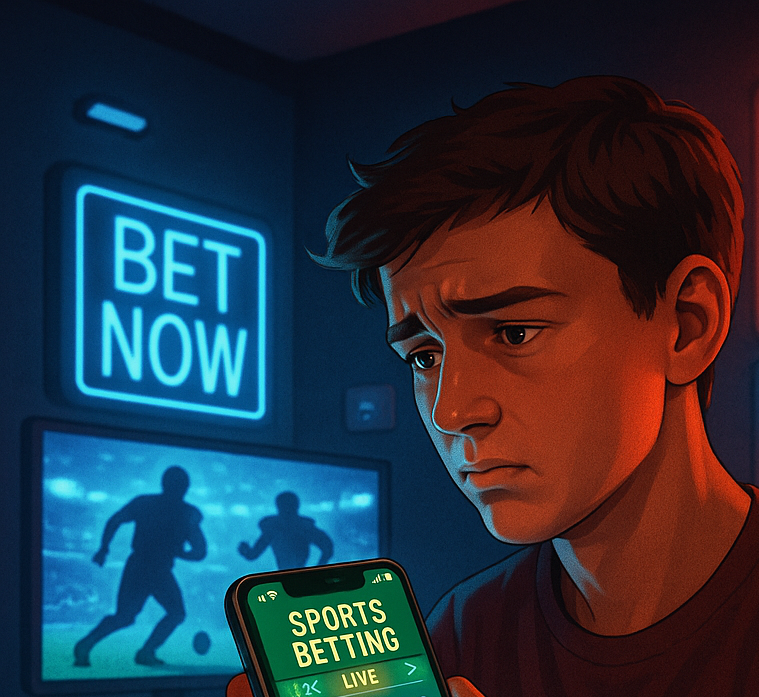
I am a lifelong Philadelphia Eagles and Phillies fan. I’m also a former athlete who played baseball at the college level and loved playing just about any sport with which I could get involved. But lately, when I turn the TV on to watch any sports from my beloved Philadelphia teams to my favorite Brazilian soccer team, I am forced to see just as much commentary and advertisement on sports betting as I do the game itself. Whether it’s logos on uniforms or Jamie Foxx – not doing his best Ray Charles impersonation – but pushing the MGM Grand betting app, I see more about prop bets, over/unders, and parlays than I do batting averages, wins above replacement, and quarterback ratings. Everything is flashy, exciting, and looks like an easy path to riches. They even offer you free money to try your luck and promise to let you bet it again if your first bet is not a success.
Every time I see the sports betting commercials or watch the DraftKings sponsored halftime shows encouraging you to make your next bet, I hear in the back of my mind the guy in the corny old after-school programs handing out drugs, saying, “Try it, you’ll like it”. What’s worse is that the bets are at your fingertips on the cell phone connected to a credit card.
So, I can see how easy it is for a high school student to get caught up in and even addicted to gambling. They grow up with fantasy football and fantasy baseball leagues, which is basically a gateway drug to online gambling. If they are like my daughter when they were in high school, they have access to their parent’s credit card since it’s already connected to the Amazon, Grubhub and Uber apps on their phones. They do not see or pay the credit card bills. There is a lot of fun and seemingly no consequence to losing.
You would hope that this would create all kinds of red flags for the sports betting industry; that it would make them think of every way possible to keep kids off of the gambling apps. Not to drop a reference to my daughter again, but we took her to Las Vegas once and got yelled at by a worker in the hotel’s casino lobby because she stepped off the path for walking through the casino. This, despite the fact that I was holding her hand.
But when it comes to betting apps, there are no real protections for minors. Open the app, input a fake date of birth more than 21 years back in time, hook up the credit card, and have at it. Making matters worse is that teenagers and young adults in their early 20s do not have fully matured brains and lack the type of impulse control and understanding of the consequences that are necessary to comprehend that the odds are stacked against them, limit their risk and losses, and otherwise responsibly gamble.
This has had devastating consequences. Researchers have found that more than half of high school-age boys gamble on a regular basis. A recent study by the University of Michigan reported that only 2% of parents think that their child has gambled online. These children go on to rack up massive amounts of debt and develop addictions. Then they go to college, where they are surrounded by even more gambling and less oversight. Gambling addiction can require lifelong therapy and require assistance with managing finances.
The online gambling industry needs to do more to protect minors by preventing their access to gambling apps. We have the technology to verify the user’s identity through scanning government-issued identification and comparing that to a selfie taken on the phone. The online gambling industry should put the same money and effort into protecting kids as they do to advertising their business and force-feeding the next prop bet during your Sunday football game. If they don’t, our children can face lifelong addiction and families can suffer financial ruin, all while the gambling sites prosper, fully aware of the damage they have inflicted.